
Martin County Probate Records
Martin County does not have a separate probate courthouse. Probate matters are filed through the Martin County Clerk and heard in the Circuit Court. The research map names the local probate forum as the Probate Division of the Circuit Court. That means the same courthouse record path used for many civil and family matters also applies to estates and guardianships.
Probate records can involve estates of deceased persons, wills, appointment of personal representatives, guardianships, small estate affidavits, inventories, accountings, creditor notices, court orders, distribution records, and closing filings. Simple estates can move faster than contested estates, but no official Martin County probate timeline was published in the sources reviewed. Timelines depend on assets, creditors, heirs, real estate, notices, disputes, and court scheduling.
For records access, the filing type should be identified before the request is sent. An estate file may need the decedent's full name and approximate death or filing year. A guardianship file may need the ward's name and case number, but the public copy available may be limited. A small estate affidavit request may be narrower than a full estate administration request. Clear labels help the Clerk distinguish the document being requested.
The local anchor is the Martin County Clerk's Office at 129 Main Street / PO Box 120, Shoals, Indiana 47581. The Clerk phone is (812) 247-3651, fax is (812) 247-2791, and posted hours are Monday through Friday from 8am to 4pm.
Probate Terms Defined
Probate filings use terms that do not always appear in ordinary civil court records. These definitions help identify what kind of Martin County probate record is being searched or requested.
- Testator
- A person who made a will.
- Executor
- A person named in a will to carry out estate duties, often called a personal representative in court records.
- Intestate
- Dying without a valid will, so estate distribution follows Indiana law.
- Guardianship
- A court case appointing someone to act for a minor or incapacitated adult.
- Small estate affidavit
- A simplified estate document used when Indiana law allows property transfer without full administration.
Search Martin County Probate
Start with Indiana Courts Case Search for public probate, estate, and guardianship entries when they are indexed and open to public view. Search by decedent name, ward name, party name, case number, county, case type, or filing year when those fields are available. If the case is old, restricted, misspelled, or not indexed in the public portal, call or visit the Clerk.
MyCase is not the official record. The MyCase terms state that official records must be obtained from the court maintaining the record. In Martin County probate matters, the practical official-copy route is the Clerk.
If MyCase does not return a result, that does not prove no probate file exists. Older matters, name variations, sealed filings, guardianship restrictions, and indexing limits can all affect online results. The Clerk can search with local details that are not always obvious to the public portal, such as a prior surname, estate caption, or approximate filing year.
- Search MyCase by name or case number and narrow to Martin County if possible.
- Check whether the case type indicates estate, guardianship, or another probate-related matter.
- Write down the cause number, party names, filing date, and document names.
- Call the Martin County Clerk to confirm copy availability and the total fee.
- Request plain or certified copies in person or by mail.
Probate Court Contact
Because probate is part of the Circuit Court structure in Martin County, the relevant local offices are the Clerk and Circuit Court. The Clerk handles filings, copy requests, and certification. The court hears probate matters and enters orders.
Martin County Clerk
129 Main Street / PO Box 120
Shoals, IN 47581
(812) 247-3651
Monday-Friday 8am-4pm
Martin County Circuit Court
129 Main Street
Shoals, IN 47581
(812) 247-3652
Monday-Friday 8am-4pm
Martin County Probate Fees
The Martin County Clerk fee list names estate and guardianship filing fees. It also lists copy and certification charges. The Clerk should be contacted before mailing a request because the total depends on page count, certification needs, and the exact documents requested.
| Item | Amount |
|---|---|
| Estate filing | $177 |
| Guardianship filing | $177 |
| Plain copies | $1 per page |
| Certification | $3 each |
| Small Estate Affidavit form | Form listed by Clerk, fee not separately published in research |
Indiana probate law is the state-level framework for estate administration.
Indiana Code 29-1 is the probate code source assigned to Martin County probate records.
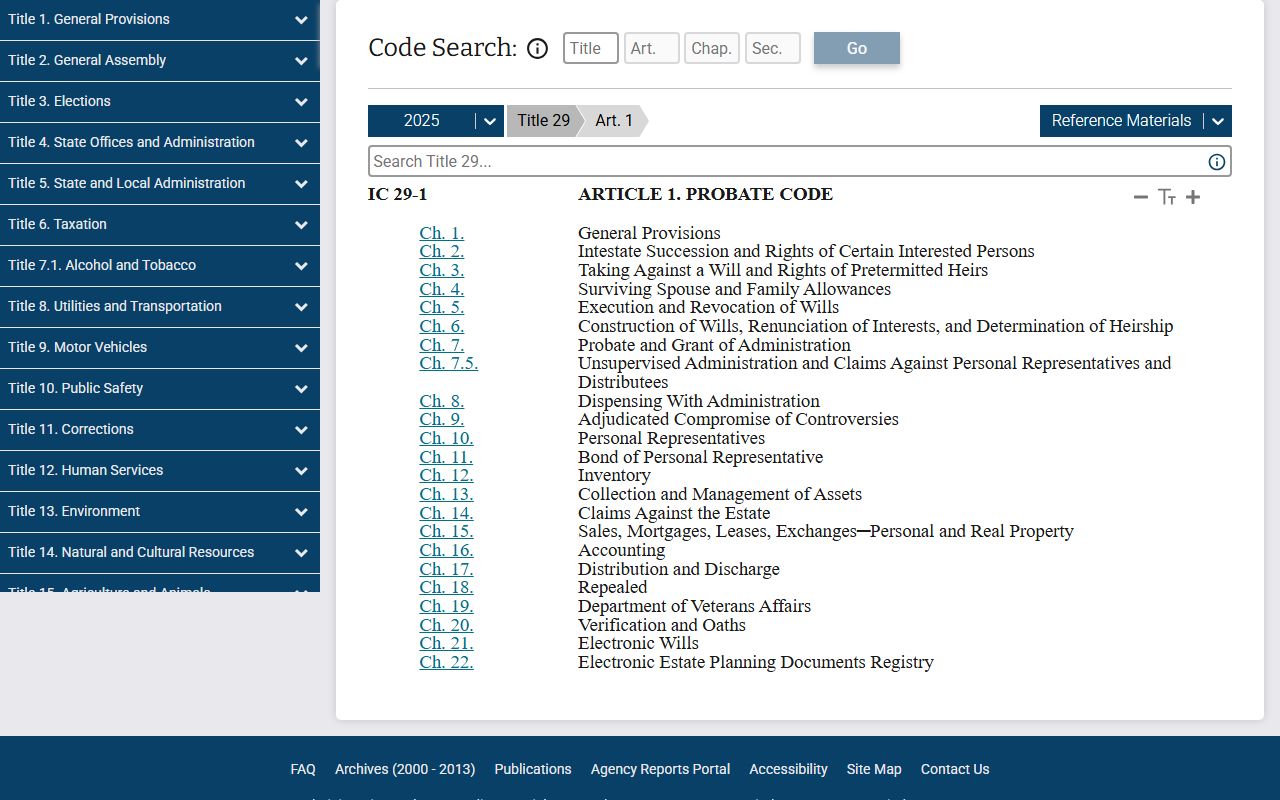
The local Clerk handles filings and copies, while the Indiana probate code supplies the broader legal structure.
What Probate Files Show
A Martin County probate file may show the decedent or ward name, case number, filing date, petitioner, personal representative or guardian, attorney, will-related entries, inventory filings, accountings, creditor notices, hearing dates, orders, bond entries, claims, distribution filings, and closing orders. Guardianship files may include medical, school, care, and financial material that is not suitable for broad public release.
When requesting copies, provide the decedent or ward name, case number if known, approximate filing year, document title, copy type, requester contact information, and payment. Certified probate documents are often needed for banks, title companies, out-of-state proceedings, and property transfers.
| Record Field | What It Means |
|---|---|
| Case number | The Indiana court cause number assigned to the probate matter. |
| Estate or ward name | The deceased person, minor, or protected person tied to the file. |
| Personal representative / guardian | The person appointed or proposed to act for the estate or ward. |
| Inventory / accounting | Filed lists or reports of property, assets, expenses, and distributions. |
| Court orders | Judge-entered directions approving authority, actions, or closure. |
Restricted Probate Records
Probate records are not all equally public. Estate docket entries and many filed documents may be public, but guardianship matters can include protected medical, financial, and personal information. Records involving minors, incapacitated adults, protected addresses, sealed filings, and financial account details may be redacted or withheld under Indiana court rules and orders.
The Martin County Recorder can be a separate fallback for recorded deeds or land records tied to an estate. That does not make the Recorder the probate court. It only means estate-related real estate may also create county land records outside the court file.
That split can matter after an estate closes. The probate file may show authority to act, an order, or a distribution, while the Recorder's office may hold the deed or other recorded instrument that changed the public land record. For a complete property trail, both record sets may need to be checked.
Estate issues sometimes overlap with recorded land records held outside the court file.
The Martin County Recorder page is relevant when probate research turns to recorded deeds or other non-court county records.
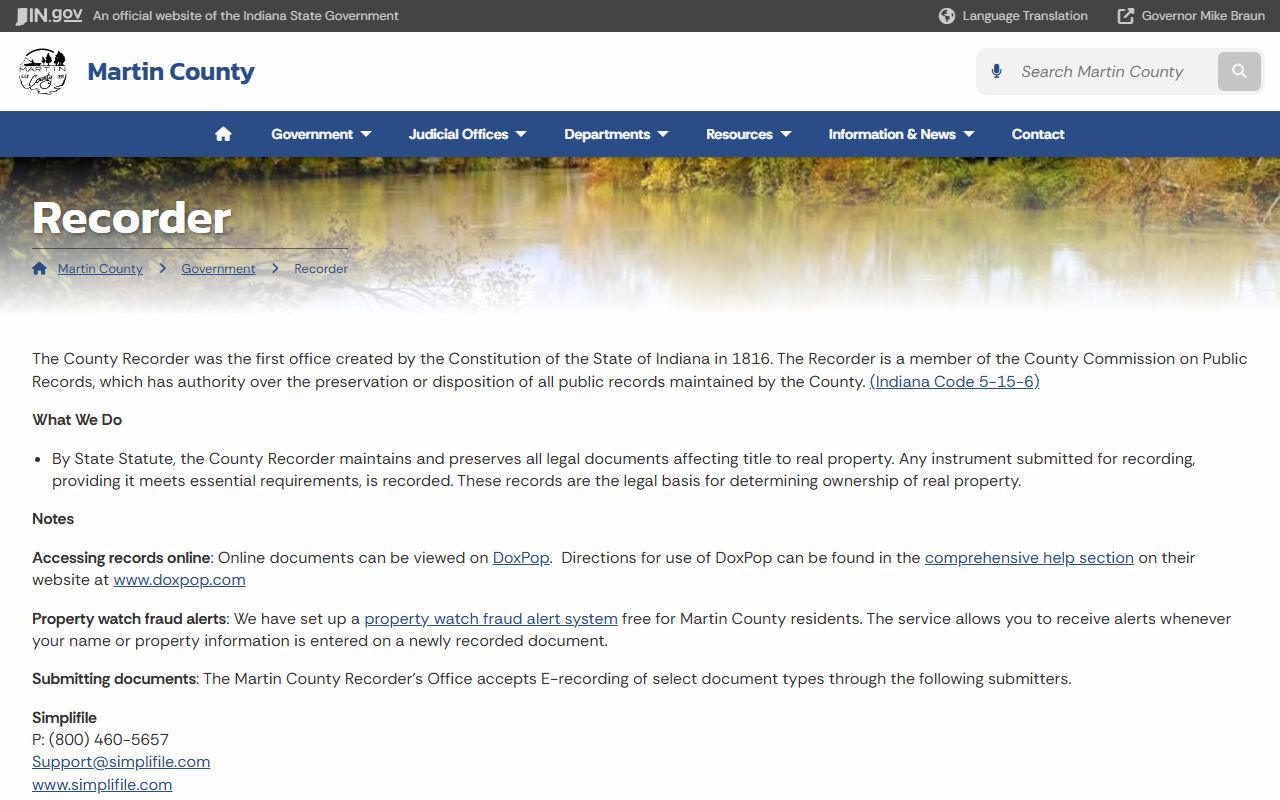
Use the Recorder as a related-record source only when the probate issue involves recorded property documents.