
No Martin County Warrant Database
No official online Martin County active warrant search or most-wanted list was located in the reviewed county sources. The official Sheriff page provides the Sheriff's Office and Security Center contact information, while the court and Clerk pages provide the Circuit Court and Clerk contacts. Because no county warrant list was confirmed, a Martin County warrant search should start with a fallback chain instead of an online database claim.
The safest local route is to confirm warrant or custody questions with the Martin County Sheriff's Office, then use the Circuit Court or Clerk for court-case status. Bench warrants can be tied to public docket entries in MyCase, but the public case display may not show every warrant detail. Search warrants, juvenile warrants, sealed warrants, and active investigative materials may be restricted.
Important: Do not rely on unofficial warrant websites for surrender, bond, or court-date decisions in Martin County.
Martin County Warrant Contacts
Different offices answer different warrant questions. The Sheriff's Office is the local law-enforcement and custody fallback. The Circuit Court and Clerk are the best fit for bench warrants, missed court dates, failure-to-pay entries, and case records. The Prosecutor may handle pre-trial deferral questions, but the research does not support sending warrant surrender negotiations there without confirmation.
| Need | Official channel | Use |
|---|---|---|
| Active warrant or custody question | Martin County Sheriff's Office / jail, (812) 247-3726 | Local law-enforcement fallback and surrender logistics. |
| Bench warrant or missed hearing | Martin County Circuit Court, (812) 247-3652 | Court-date, hearing, and judge-issued order questions. |
| Official court case copy | Martin County Clerk, (812) 247-3651 | Certified records, docket copies, and case documents. |
| Related public case search | Indiana MyCase | Public case events such as warrant ordered, recalled, bond, or hearing entries where visible. |
Search Martin County Warrant Records
When there is no county warrant search portal, the practical search starts with the underlying case. MyCase can show public docket entries in criminal, traffic, or civil enforcement cases. Those entries may mention failure to appear, warrant ordered, warrant issued, warrant recalled, bond, hearing, or disposition information. If a person has already been arrested on a warrant, INjail or SAVIN may show custody status.
- Search MyCase for the person, case number, citation number, or related court case.
- Read the docket for failure-to-appear, warrant, bond, recall, or next hearing entries.
- Call the Circuit Court or Clerk to confirm the court status if a case entry is unclear.
- Call the Sheriff's Office for custody, surrender, or active law-enforcement questions.
- Check INjail or SAVIN only when the issue is custody after arrest.
There is no confirmed official Martin County Sheriff app with a warrant-search feature. Use the phone and court-record channels documented in the local research.
Martin County Warrant Search Fields
Because the research did not locate a public county warrant database, there is no official local warrant-search field table to reproduce. The closest public search fields are the MyCase fields for the underlying court case and the INjail fields for current custody. Those fields are useful, but they search related records rather than a standalone Martin County warrant list.
| Field | Where used | Notes |
|---|---|---|
| Case number or cause number | MyCase and Clerk | Best field for a known bench warrant or criminal case. |
| Last name and first name | MyCase, INjail, SAVIN | Useful when case number is unknown, but common names need extra filters. |
| Citation number | MyCase | Useful for traffic or infraction failure-to-appear issues. |
| County or court | MyCase and INjail | Select Martin County or Circuit Court when available. |
| Booked or released date | INjail | Helps identify custody after a warrant arrest. |
Martin County Warrant Types
Warrants serve different functions. Some authorize arrest after probable cause. Some are bench warrants issued by a judge after a missed hearing or failure to comply with a court order. Some authorize a search and may remain sealed while an investigation is active. The type determines which office can confirm the status and what a person should do next.
- Arrest warrant: issued after probable cause for a criminal charge or alleged offense.
- Bench warrant: issued by a judge, often for failure to appear, contempt, failure to pay, or probation violation.
- Search warrant: authorizes a search of a place, person, or property and may be sealed during an investigation.
- Body attachment: may arise in limited civil or court-compliance contexts.
- Probation violation warrant: tied to alleged noncompliance with probation or community supervision.
Note: Juvenile and sealed warrants are not ordinary public warrant records.
What Martin County Warrants Show
If a warrant or related case entry is public, the available data may be limited. A court docket may show that a warrant was ordered or recalled without displaying the full warrant document. A custody record may show a hold or case link without the full court history. The Clerk or court can confirm official docket status, and the Sheriff's Office can address custody logistics.
| Field | What it may show |
|---|---|
| Person name | The person named in the warrant or related case entry. |
| Case number | The court case connected to a bench warrant, charge, or order. |
| Issuing court | Usually the court that entered the order or warrant event. |
| Warrant type | Arrest, bench, search, body attachment, probation violation, failure to appear, or similar label. |
| Underlying charge or case | The offense, infraction, probation matter, or civil enforcement issue behind the warrant. |
| Issue or recall date | When the warrant was entered or later quashed, recalled, or resolved if public. |
| Bond or hold | Bond amount, no-bond status, or hold condition when the public record supplies it. |
Warrants and Martin County Custody
If a person has been arrested on a Martin County warrant, the next useful check may be custody rather than warrant status. INjail Public Access is the county-jail portal for Indiana and can be filtered to Martin County. Indiana SAVIN can be searched for custody notification by name, offender identification number, or case number.
The manifest source assigned to this warrant page points to CourtListener, a non-official federal docket and opinion access site.
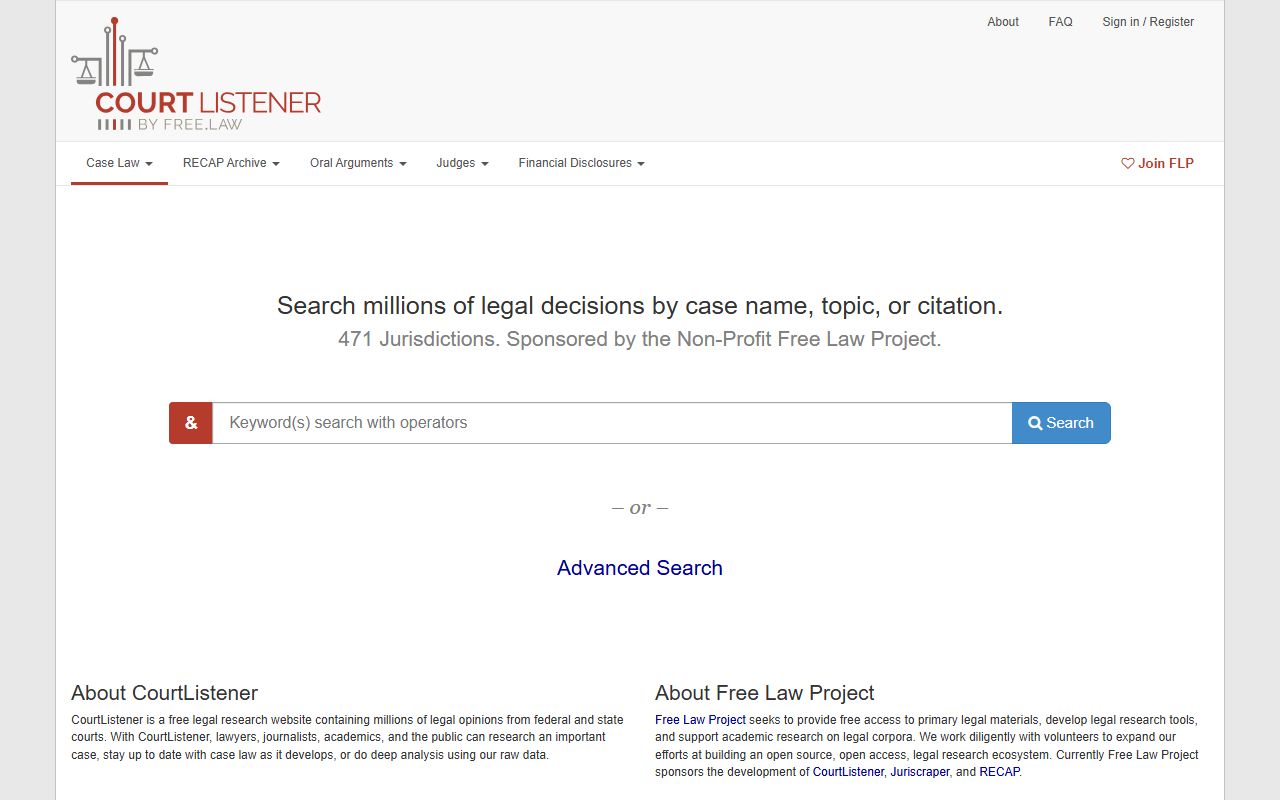
Federal docket tools can help with some federal materials, but Martin County local warrants should be confirmed through the Sheriff, Circuit Court, Clerk, or related state systems.
Resolve a Martin County Warrant
Resolving a warrant is not the same as searching for it. A person who finds a possible active warrant should verify it through official channels, write down the case number and issuing court, and consider legal counsel before appearing if the warrant is criminal or no-bond. For missed court dates or failure-to-pay matters, the court or Clerk can confirm the next hearing, payment status, or recall entry. For surrender logistics, the Sheriff's Office is the local law-enforcement contact.
- Verify through MyCase, the court, the Clerk, or the Sheriff's Office.
- Record the cause number, charge or case type, and any bond condition.
- Ask an attorney about criminal, no-bond, probation, or unclear warrant status.
- Coordinate with the Sheriff's Office before any surrender or custody step.
- After resolution, confirm the recall, quash, release, or next hearing entry.
Restricted Martin County Warrants
Not every warrant is public. Search warrants can be sealed while an investigation is active. Juvenile warrants and juvenile case records may be restricted. Expunged or sealed criminal case materials can be hidden from normal public searches. Federal warrants are separate from Martin County local court records and should not be expected in the county Clerk's file unless a related local case exists.
Indiana public-records law and court-record rules allow public access to many records, but they also protect confidential material. If a public search gives no result, it may mean no public case exists, the case is not filed yet, the record is sealed, the search terms are wrong, or the warrant status must be confirmed directly with the proper office.